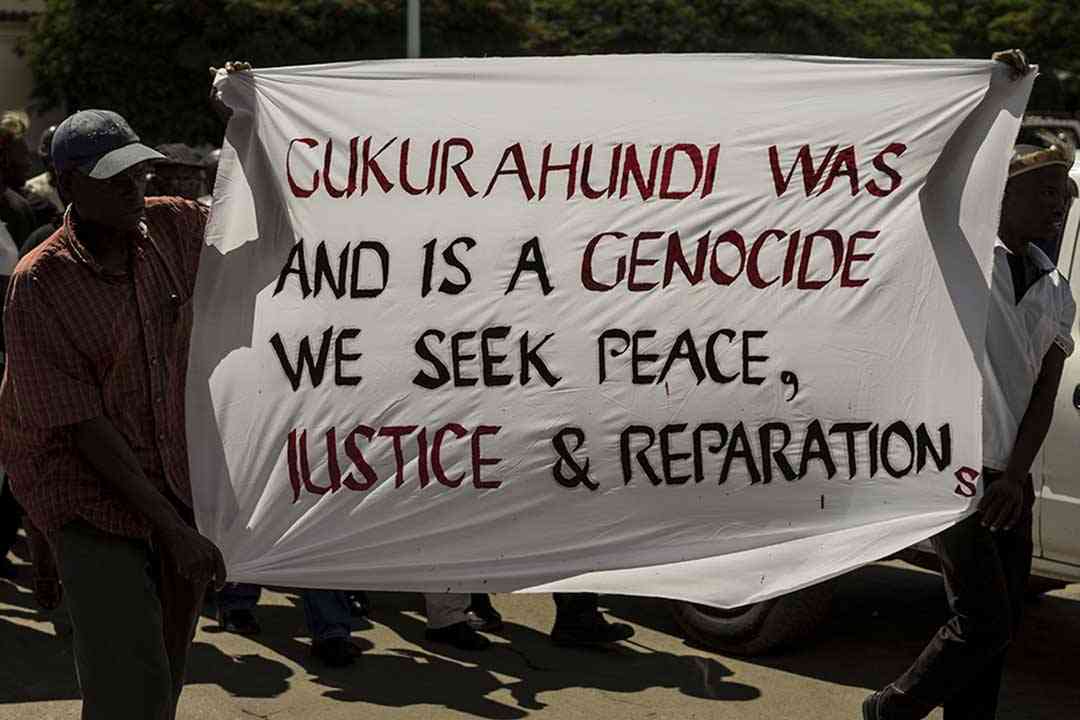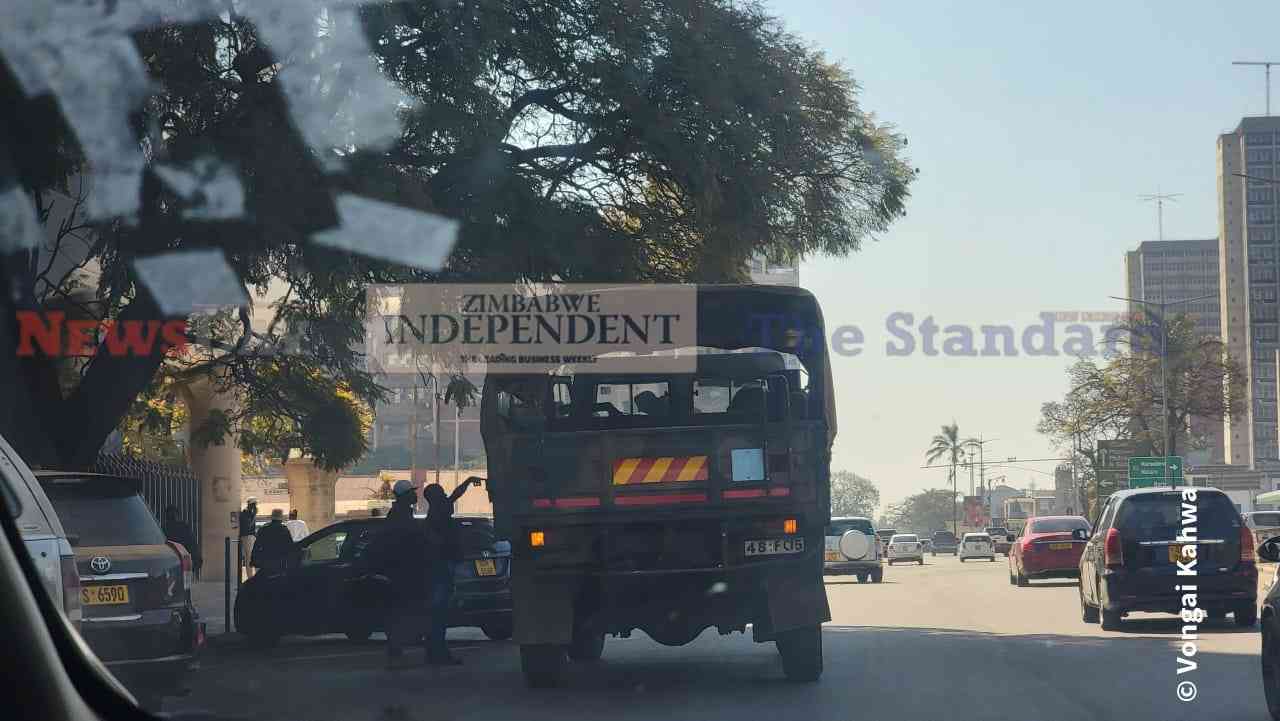
HARARE, Jul. 31 (NewsDay Live) -July 31 came and went. Activists opposed to Constitution Amendment No. 3 Act had called for a nationwide shutdown on July 31, 2026 — a date deliberately chosen to echo the anti-corruption protests of July 31, 2020.
Ahead of the planned protests, Zanu PF leaders, government ministers, soldiers and police commissioners spent the preceding week staging choreographed warnings in every province.
In the end, both sides may claim vindication, because almost nothing happened.
Most businesses in Harare and Bulawayo are operating as normal, with only a handful of shops closing, while public transport was briefly disrupted in some suburbs before commuter operators resumed services.
The cities quieter than usual. There is no shut down.
This is not new. It is, at this point, a pattern, and it deserves to be examined honestly rather than simply reported as another “protest flops” headline.
A familiar scriptZimbabwe has now lived through this exact sequence at least four times in six years: a call goes out, usually on social media; government deploys ministers, soldiers, police and the CIO to warn citizens off; the State assures the public that “there will be peace and tranquillity”; and on the day itself, streets are subdued rather than stormed.
July 31, 2020 followed this script.
- Letters: Women representation faces hurdles
- Letters: Makandiwa, preaching heresy
- CSO petitions Sadc over diaspora vote
- Nkosana Moyo steps down as Apa leader
Keep Reading
March 31, 2025, when expelled war veteran Blessed Geza demanded President Emmerson Mnangagwa’s resignation, followed it.
October 17, 2025 — Geza’s “million-man march”, timed to disrupt Zanu PF’s annual conference — followed it too, and ended with elderly organisers denied bail on the grounds they were flight risks.
Now, July 31, 2026 has followed it again.
The common thread isn’t apathy. It’s calculation.
Where are the leaders?The question you raise is fair and one many Zimbabweans ask privately: if these are genuine leaders, why are they never on the ground with the people they’re calling into the streets?
Geza organised October’s march from an undisclosed location while clad in military fatigue in a video address, having been a wanted fugitive since February 2025 on charges including terrorism and undermining presidential authority.
He was never at Freedom Square!
The organisers of the 2020 protests, including Jacob Ngarivhume, called for demonstrations, but were arrested well before the day itself, their absence from the streets a matter of State design rather than choice.
Dozens of activists were rounded up in the run up to the protests.
Zimbabwe’s post-2000 record on unsanctioned demonstrations is not ambiguous: tear gas, mass arrests, and in some cases, as one protester in the 2025 crackdown told Al Jazeera, real fear that kept willing participants at home because there was no co-ordination to protect them once they arrived.
A leader who calls people onto the street and then isn’t there to stand with them isn’t necessarily a coward — he may be someone who has already done the arithmetic on what happens to the first hundred people who show up, and decided his usefulness is better preserved elsewhere.
What does a non-event actually achieve?
This is the harder question, and I don’t think there’s a comfortable answer.
A shutdown that doesn’t fully materialise still isn’t free.
Cross-border traders, vendors, commuter operators and informal workers — the people with the least slack in an economy already defined by scarcity — lose a day’s income out of caution, whether or not they support the cause.
Self-employed traders during the 2020 stayaway said they closed out of fear of disorder, not conviction, and that lost trading days hit directly into their pockets.
That cost is real and regressive; it falls hardest on people with no stake in the constitutional debate at all.
Against that, what’s gained is a symbolic marker — proof that opposition to CAA 3 exists, however muted its street expression.
Whether that trade-off is “worth it” depends entirely on what the goal actually is.
If the goal is to force policy reversal through mass mobilisation, repeated non-events are not building toward that; each one that fizzles makes the next call easier to ignore, by government and by citizens alike.
If the goal is narrower — sustaining visibility, testing government’s nerve, keeping the issue alive in courts and in public conversation — then a quiet CBD with a few closed shops and a lot of international headlines about security deployments may be doing exactly what it was designed to do.
Those are two very different strategies wearing the same headline, and Zimbabweans deserve more honesty from organisers about which one they’re actually running.
Why 2017 is the wrong comparison
It’s tempting to hold 2017 up as proof that Zanu PF is the only political formation capable of moving Zimbabweans in large numbers — the march that helped ease Robert Mugabe from office drew genuinely enormous, joyful crowds with no tear gas in sight.
But that comparison doesn’t hold up well, and I’d resist the framing that it proves anything about mass mobilisation generally.
November 2017 wasn’t a citizen-organised protest against the State.
It was a demonstration with the army’s tanks already on the streets, the security establishment having already acted, and the ruling party’s own structures actively convening the march.
People turned out in safety because the risk calculus had already been settled by whoever held the guns — turning out was, for the first time in the Mugabe era, the safe option rather than the dangerous one.
That’s a fundamentally different event from Zapu notifying the police of a peaceful gathering at Africa Unity Square and hoping the State honours its own laws on the day.
The more instructive comparisons are the ones that actually pitted citizens against a functioning security State: the 2016 #ThisFlag stayaway, the 2018 post-election violence, the January 2019 fuel anti-price hike protests, and the succession of Geza-linked calls since 2025.
Some of these drew real numbers before being met with force; others, like this one, drew almost none.
What separated them wasn’t the presence or absence of Zanu PF’s blessing — it was factors like how spontaneous versus pre-announced the action was, whether it had an economic trigger citizens felt directly (fuel prices move people faster than constitutional clauses), and how much time government had to pre-position security forces.
Announced protests with a fixed date, several weeks’ notice, and a constitutional rather than a cost-of-living grievance are, on this record, the format most reliably neutralised by a warned and waiting state — under both the Mugabe government and Mnangagwa’s since.
The real contest is online
If July 31 proved anything, it’s that the physical street is no longer where this fight is being decided — government has gotten too efficient at pre-empting it.
The conversation that actually moves opinion now happens in the days before and after, on timelines and group chats, where CAA 3’s substance — extended terms, parliamentary rather than direct election of the president, a reshaped Senate — gets argued over by people who were never going to march anyway but do vote, and do talk.
Whoever shapes that conversation with the clearest, most persistent argument, rather than the loudest one-day call to action, is likely to have more influence over how Zimbabweans ultimately judge CAA 3 than any stayaway has managed so far.