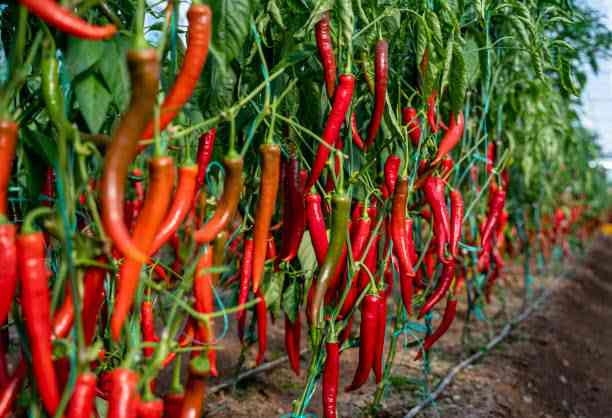
Women smallholder farmers in Matabeleland North have entered a new era of commercial agriculture through a chilli production initiative that is creating guaranteed markets, boosting household incomes and advancing rural industrialisation.
The project, dubbed 500 Women Chilli Project spearheaded by Lupane Veggie Guys in partnership with the Lupane Women’s Centre, has established a contract farming model where rural women receive chilli seed and technical support before selling their entire harvest to the company for processing.
The harvested chillies are transformed into value-added products such as sauces, juices and vinegars, allowing farmers to participate in a broader agricultural value chain rather than remaining producers of raw commodities.
Project coordinator, African Food Revolution director, Makhosi Mahlangu, who is also part of Lupane Veggies Guys said the initiative was designed to address some of the major constraints affecting smallholder farmers, including limited access to markets, low incomes and lack of value addition opportunities.
He said the project represented a shift from traditional farming towards a community-based industrialisation model.
“This is not merely an agricultural programme, but a rural industrialisation and food systems model designed to empower women through indigenous value chains, agroecology and community-based enterprise development,” Mahlangu said.
He said empowering rural women through commercial agriculture was key to reducing poverty, strengthening food systems and creating employment opportunities.
“Rural communities should not only supply raw materials but should also participate in processing and value addition so that more wealth remains within communities,” Mahlangu said.
- Zanu PF cllr ‘denies’ CCC members food aid
- Land barons invade Ntabazinduna
- Whose responsibility is preservation of cultural heritage?
- Contango Holdings eye thermal coal market
Keep Reading
The project has also adopted climate-smart farming approaches to improve production in Matabeleland North, an area characterised by dry climatic conditions.
Mahlangu said the programme was combining traditional farming methods with technologies such as GIS mapping, geotagging and climate-smart production techniques to improve sustainability and traceability.
Farmers involved in the project are being trained in sustainable farming practices, quality control, market requirements and value addition.
One beneficiary said the guaranteed market had transformed chilli production from a risky venture into a viable business.
“Previously, we would grow crops without knowing whether we would find buyers. Now we have confidence because we know there is a market for our produce,” she said.
With demand for chilli products increasing, organisers are planning to expand the initiative to Nkayi and Gokwe districts.